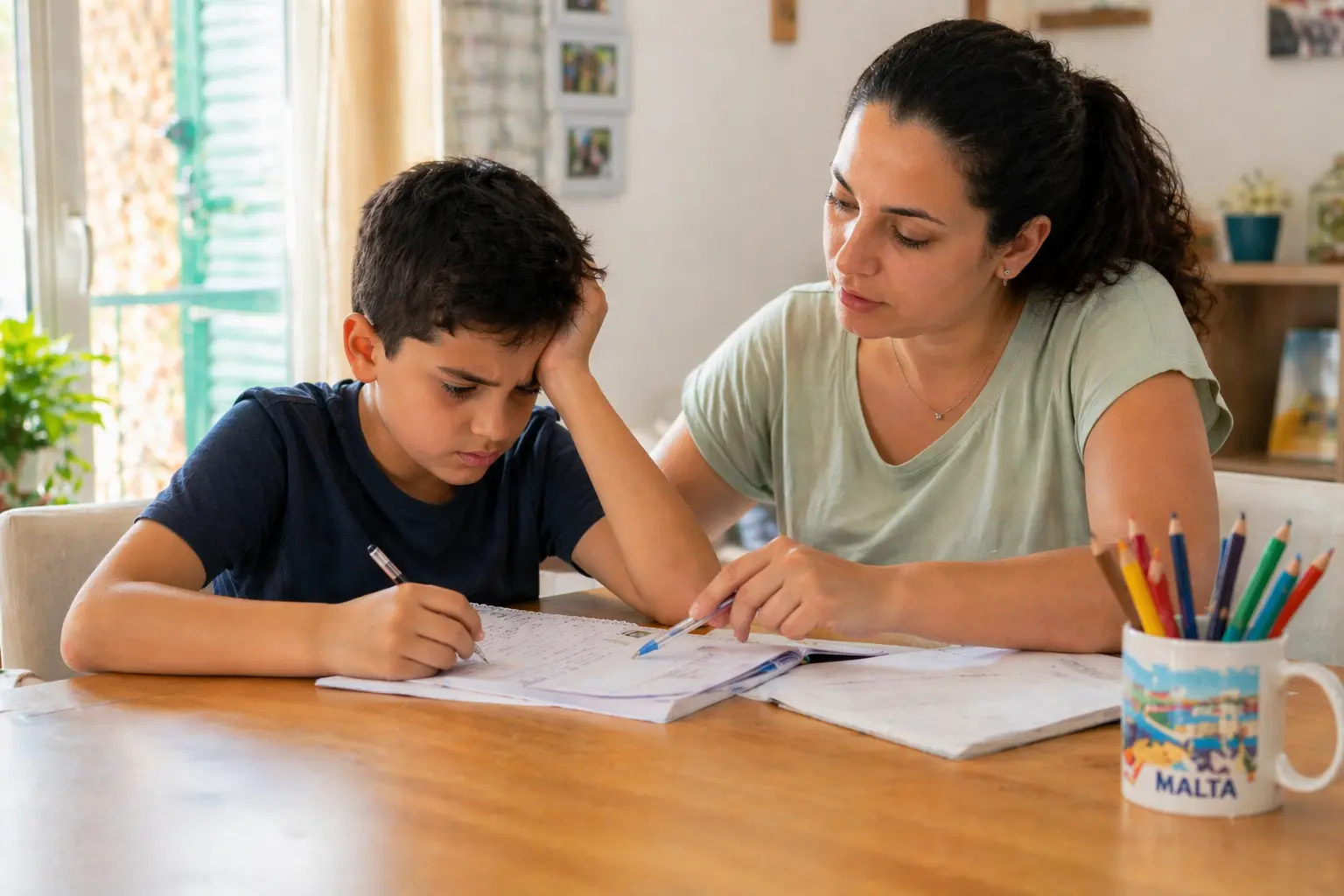
Catch-Up Classes Malta: Free tutoring for children (who it’s for and when to skip it)
In Malta, there is a government programme that many parents have heard of but don’t fully understand, yet it can save hundreds of euros on private tutoring. It is called Catch-Up Classes, and its goal is to help children consolidate what they have learned, close knowledge gaps, and build confidence before the next school year.
The programme is open to children from Year 1 to Year 10, regardless of whether they attend a state, church, or private school. And importantly, it’s completely free, as it is organised by the Maltese Ministry for Education.
Who Catch-Up Classes are for (and who should skip them)
This programme is most valuable for children who lack confidence in certain subjects, need more time to understand the material, or are dealing with a language barrier, whether in Maltese or English, which can make it harder for them to understand classroom content. If you feel your child is struggling with something and you want them to be better prepared for the new school year or supported during the year, this programme is worth considering. It still follows a school structure, just in a more relaxed format.
If language difficulties are affecting your child’s school performance, it may also help to understand how the Malta school grading system works and how language skills can influence assessment results.
On the other hand, if your child is doing well during the school year and you are mainly looking for an affordable summer activity, it may be better to choose a different government programme instead. Options include the summer programme Skola Sajf (which is not a traditional school but rather an organised activity programme) or morning sports programmes run by Sport Malta.
How the programme works (groups, teachers, lesson structure)
Catch-Up Classes focus on revising material from the previous school year. Lessons take place in small groups, usually up to fifteen children, which creates a very different dynamic compared to a standard classroom.
Teachers have more space to focus on individual students, and children tend to participate more actively, including those who are usually more passive at school. Classes are led by qualified teachers.
That said, the teaching style and quality can vary depending on the specific centre and teacher. This is not one-to-one tutoring but a group-based programme, so the level of individual attention also depends on the group composition and how well the child connects with the teacher.
Schedule: summer and winter dates
The summer programme runs from mid-July to early September and lasts eight weeks. Classes take place four days a week, from Monday to Thursday. Morning sessions are structured to avoid overwhelming children. For primary school students, lessons are usually from 9:00 to 12:00, while older students attending secondary school in Malta generally start earlier and finish around 12:30.
The winter programme runs from November to June and takes place only on Saturday mornings. This allows it to support students long-term without disrupting the regular school routine.
Where classes take place in Malta and Gozo
The programme is available in multiple centres across Malta and Gozo, meaning most families can find a location within a reasonable distance.
In addition to in-person classes, there is also an online option, offering greater flexibility for families managing logistics or combining the programme with other activities.
What subjects are covered (maths, English, Maltese)
The content focuses on core school subjects. For younger children, this mainly includes maths, Maltese, English, and basic science. Older students may also cover subjects such as physics or other academic areas, depending on the group.
More important than the exact subject list is the teaching approach. The programme is flexible, and teachers often adapt the content to the specific group, which is a significant difference compared to standard classroom teaching.
How to apply (and your chances of acceptance)
Applications are submitted online via an official form. Group capacity is limited, and once full, children are placed on a waiting list.
Submitting an application does not automatically guarantee acceptance. The programme reserves the right not to accept a child. Decisions are based on the child’s school performance and where support is needed. It is not purely a “first come, first served” system, although applying early can still make a difference.
If you are unsure whether your child genuinely needs additional support, it can be helpful to first understand their school reports and grading results as well as the feedback provided by teachers.
Summary
Catch-Up Classes are primarily aimed at children who are struggling to keep up in certain subjects and need to revisit the material. The additional support helps them understand the content, build confidence, and often improves their overall approach to learning.