Malta Gave Children School Laptops – but Left Parents Without Controls
Not long ago, I was talking to several other mums at a children’s birthday party about how we manage the long summer holidays. We quickly realised that we were all dealing with practically the same problem at home. The children get up in the morning, move from their beds to their school laptops, open Roblox or YouTube and, without parental intervention, would probably stay in front of the screen until the evening.
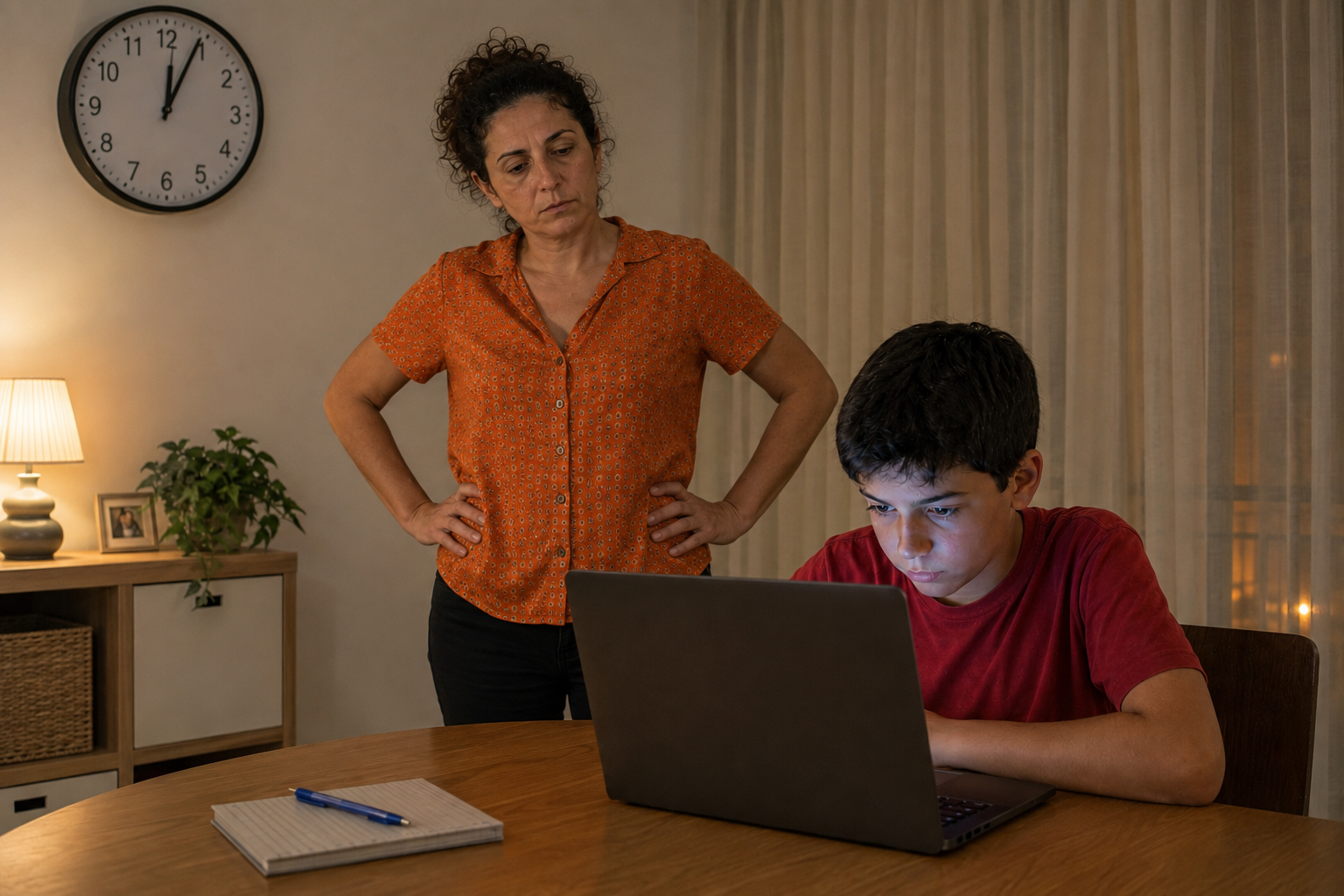
We can tell our children to switch off the computer. We can set rules, negotiate with them and explain that the summer holidays are not supposed to mean thirteen weeks spent in front of a screen from morning until night. After several warnings, you eventually walk over to your child and physically take the laptop away. The child protests, bargains, refuses to let go of it and sometimes literally ends up in a tug-of-war with the parent.
We all agreed that the daily reminders, arguments and struggles over the laptop are incredibly exhausting. At the same time, we recognised something rather absurd: the Maltese government gave children laptops primarily for educational purposes, but gave parents no reasonable way to control when or for how long their children use them.
Malta’s school laptop scheme is missing one crucial feature
I do not think giving laptops to children is a bad idea. Access to technology is important in education today, and not every family can afford to buy a separate device for each child. If every child is to have the opportunity to work with digital learning materials and develop computer skills, the government programme certainly makes sense.
However, the responsibility does not end when the laptop is handed over. Children do not use it only at school under a teacher’s supervision. They have it at home, at weekends, during public holidays and, most importantly, throughout the long summer break. Meanwhile, parents still have to go to work, take care of the household and, in many cases, look after several children. They cannot stand behind them all day checking whether they are working on a school project, watching an educational video or playing Roblox for five hours straight. Children also quickly learn that, before a parent walks into the room, they only need to switch from whatever they are doing to something educational and put on an innocent expression.
School laptops are centrally managed. Parents do not have administrator rights, cannot change system settings and cannot install their own parental-control tools. This is understandable for security reasons. The problem is that the central system does not provide them with a simple parental account through which they could set basic rules for using the device at home.
The device is therefore under the technical control of the state, while parents are left to deal with the consequences of its everyday use at home.
Parents can control a child’s phone – so why not their school laptop?
If a child uses an Android phone or tablet, the parent can use Google Family Link. They can set a daily time limit, schedule when the device locks, or lock it remotely when necessary.
Once the child has used up the allotted time, the device simply locks. The parent does not have to remind the child every ten minutes that the agreed screen time ended long ago, or eventually pull the device out of their hands.
We do not have a similar tool for school laptops.
This does not mean parents need full administrator rights, the ability to change the operating system or permission to install any program they choose. The central administrator can retain complete technical control over the device. Parents only need limited access to functions related to how the laptop is used at home.
For example, they could set a daily time limit, schedule an evening lock or temporarily restrict access to gaming and entertainment websites. School applications and educational materials could remain available. In other words, it could work like a version of Family Link designed specifically for school devices.
Malta’s long summer holidays make the problem impossible to ignore
When children are attending school, their day at least has some structure. They get up in the morning, travel to school, return home, do their homework and perhaps attend an extracurricular activity. During Malta’s summer holidays, which last approximately thirteen weeks, much of that structure disappears.
Not every family can organise outings for their children every day or enrol them in summer programmes and other paid activities. It is also extremely hot outside, while parents still have to continue working as usual. A laptop offers children instant entertainment, contact with friends and a practically endless supply of new content.
It is therefore hardly surprising that children reach for it. At the same time, it is unrealistic to expect an eight- or ten-year-old child to decide independently that they have played enough Roblox, switch off the laptop and voluntarily go and read a book.
Children are still developing the ability to regulate their own behaviour. Digital games and other platforms are also designed to keep users engaged for as long as possible. Adults therefore need to help children establish boundaries, but they need the right tools to do so. We cannot expect every parent to know how to configure a home router so that a school laptop loses internet access at designated times. Not every parent is an IT expert – and they should not have to become one simply to set basic parental controls.
Digital education requires more than handing out devices
Giving a child a laptop is easy and looks good in a presentation. Officials can count how many devices have been handed out, photograph their distribution and talk about investing in a digital future.
What is much harder is considering how a young child will actually use the device at home.
Digital education cannot simply mean giving every child their own screen. It must also include safety, support for parents and the ability to set reasonable boundaries.
Parents do not need another leaflet explaining that children should not spend too much time in front of a screen. Most of us already know that. We need a practical tool that allows us to regulate the use of a school laptop in much the same way as we can regulate the use of a child’s phone.
Because physically wrestling a laptop away from a child is hardly a modern digital solution.