What Is Santa Marija and Why Does It Matter to Malta?
For most visitors, 15 August is simply another day of their summer holiday. For the Maltese, however, it is one of the most important dates of the year. Santa Marija brings together religious tradition, memories of dramatic events during the Second World War and celebrations that fill town streets with music, processions and fireworks every year.
Every year on 15 August, Malta and Gozo celebrate the Assumption of Our Lady, locally known as Santa Marija. It is one of the country’s most important religious feasts as well as a public holiday, falling right in the middle of the peak tourist season. Many Maltese take time off during the second week of August and head to Gozo or the coast, or simply spend time with family. This is when some of the biggest celebrations of the year reach their peak.
Santa Marija has a dual significance in Malta. It is deeply rooted in Catholic tradition, but it also commemorates one of the most important events in the island’s Second World War history: the arrival of an Allied convoy that saved Malta from starvation.
The religious meaning of the Assumption
The Assumption of Our Lady is one of the Catholic Church’s most important Marian feasts. It celebrates the belief that Mary, the mother of Jesus, was taken into heaven, body and soul, at the end of her earthly life. This is why 15 August is one of the most significant dates in the Catholic calendar.
The feast has been celebrated in Malta for centuries. On Gozo, for example, the Assumption has been the island’s principal feast for more than 500 years, and Our Lady of the Assumption is the patron saint of the cathedral in Victoria.
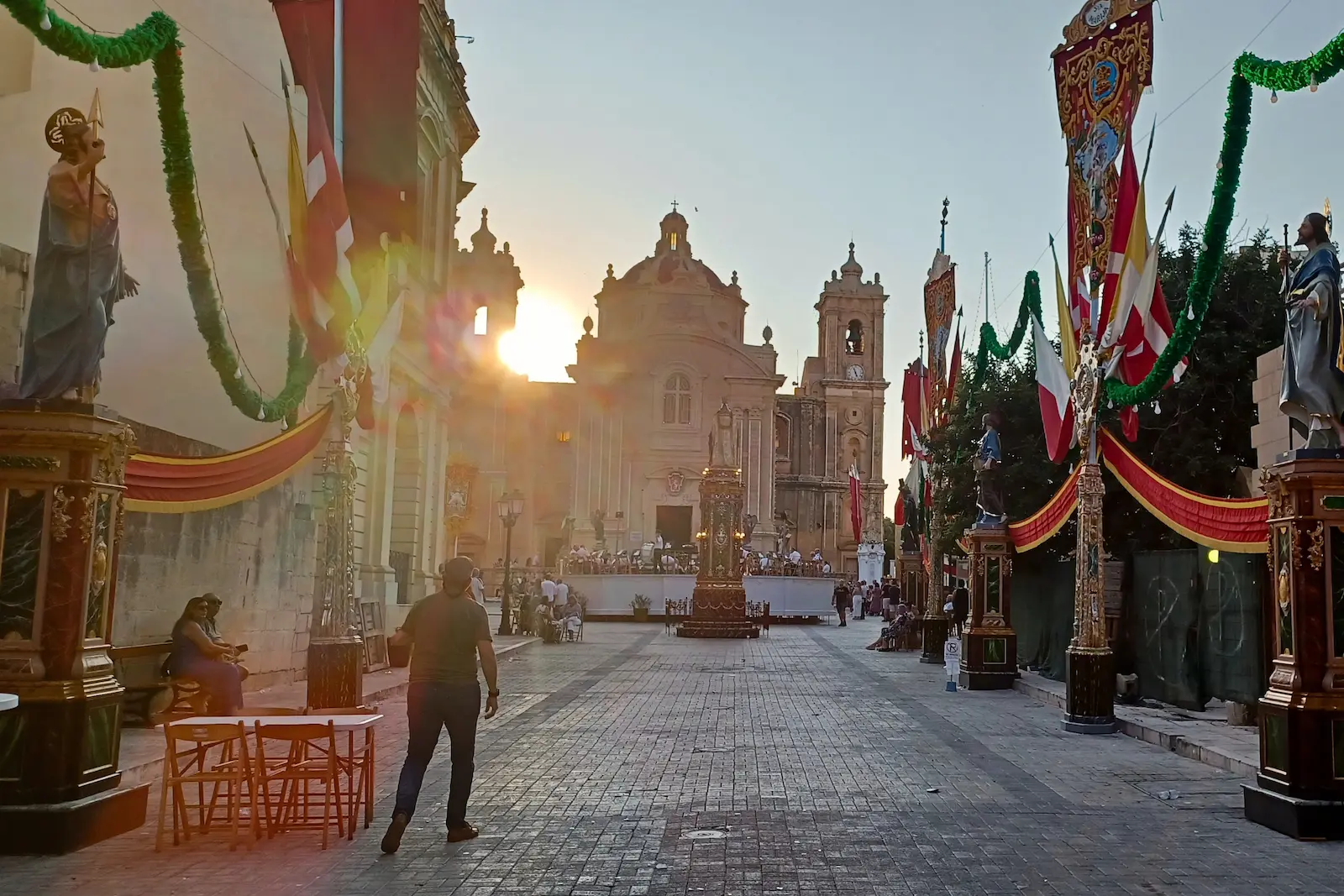
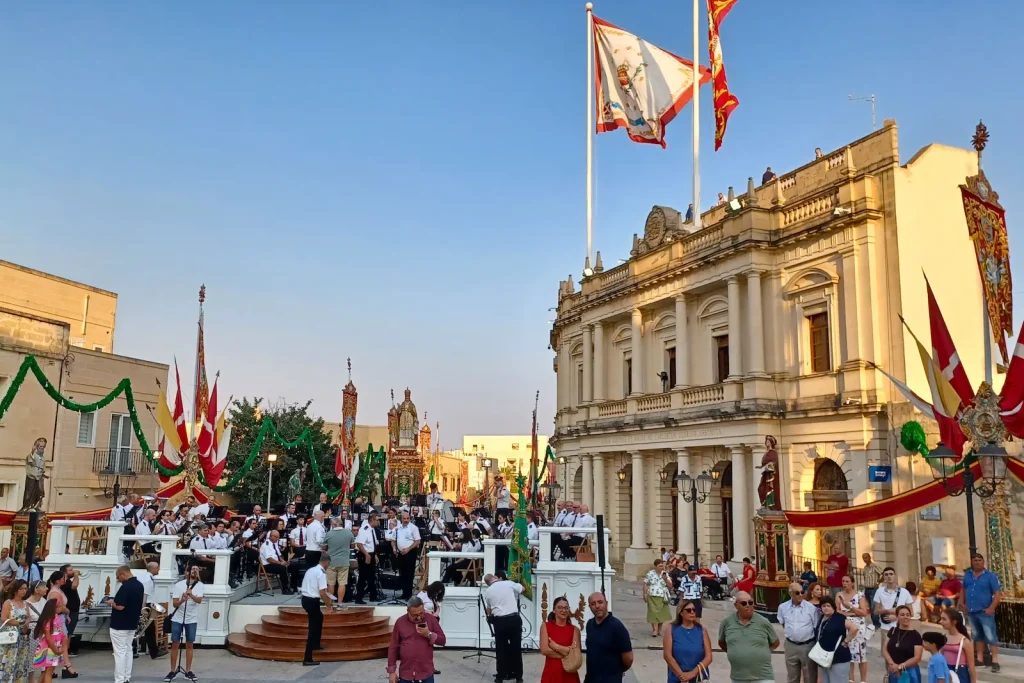
Solemn Masses, processions carrying statues of Our Lady and traditional festas take place across the country. Streets are decorated with flags and lights, brass bands perform, and the evening culminates in fireworks.
The Santa Marija Convoy of 1942
By the summer of 1942, Malta was on the verge of collapse after months of naval and aerial blockade. Food, fuel and ammunition were running out. Without help from the Allies—principally Britain, the United States and other Allied nations fighting Nazi Germany and Fascist Italy—Malta faced starvation and the loss of its ability to defend itself.
The turning point came on 15 August, when an Allied convoy sent as part of Operation Pedestal reached the Grand Harbour in Valletta. In Malta, it became known as the Santa Marija Convoy. The most famous symbol of the operation was the badly damaged tanker SS Ohio, which entered the harbour supported by two other ships. Its arrival saved the island.
When the tanker appeared in the harbour, church bells rang and people spontaneously poured into the streets. The event is still described as the “Miracle of Santa Marija”. This combination of religious tradition and historical remembrance helps explain why 15 August remains one of the most important dates in the Maltese calendar.
How and where Santa Marija is celebrated
Traditional festas take place almost every week during the Maltese summer, but Santa Marija is among the largest. People traditionally speak of the Seven Santa Marijas (Is-Seba’ Santa Marijiet): six festas on the main island, in Mqabba, Qrendi, Mosta, Attard, Gudja and Għaxaq, and one in Victoria on Gozo.
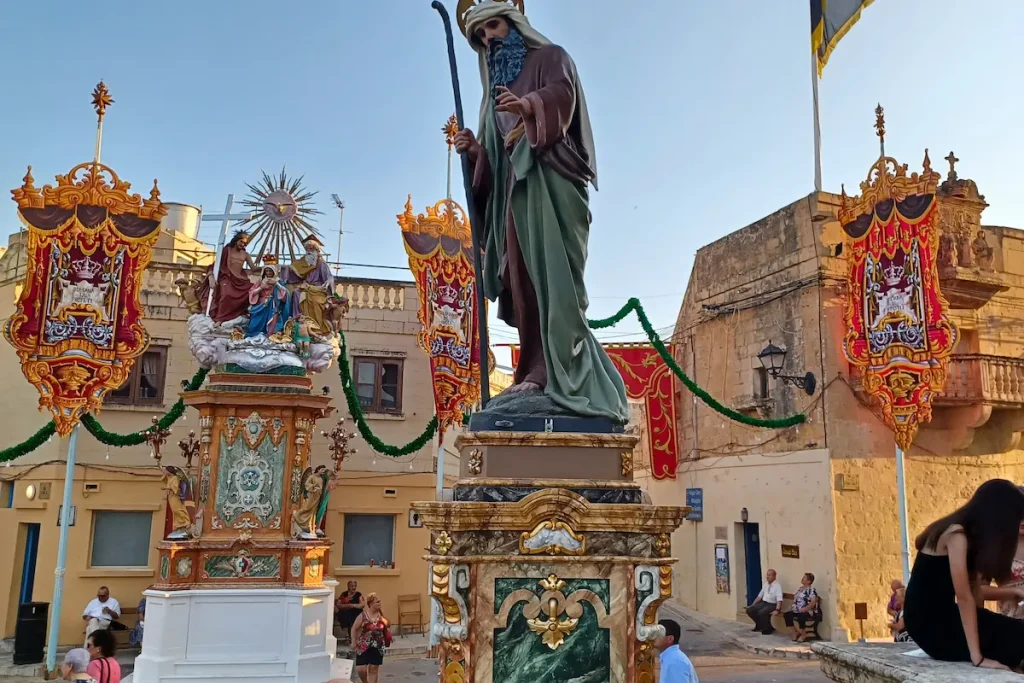
Preparations begin several weeks before 15 August. Flags, garlands and festive lights gradually fill the streets, while stands and food stalls appear outside the churches. Each town or village sets out to show that its own festa is the one worth visiting.
Stalls sell traditional nougat (qubbajt), sesame halva (ħelwa tat-Tork), fried date pastries (imqaret) and other Maltese sweets. Brass bands, fairground rides, music and the loud celebrations known as briju add to the atmosphere. This spontaneous street revelry involves singing, dancing and flag-waving until the entire town seems to come alive. In the evening comes what many visitors have been waiting for: spectacular fireworks displays, in which the different towns and villages compete with one another each year.
What happens on Santa Marija day
Although every town and village has its own traditions, the main feast day follows a similar pattern. On the morning of 15 August, parish churches hold solemn Masses, led in some places by the Archbishop of Malta or the Bishop of Gozo. Once the morning Mass is over, the celebrations move into the streets and gradually gather pace.
The afternoon programme differs from one place to another. In Victoria on Gozo, for example, traditional bareback horse races take place along Republic Street. Riders compete without saddles, often using only a simple strap, in the hope of winning an honorary banner. The tradition dates back to the 19th century. At the same time, Villa Rundle hosts a popular agricultural show where local farmers display their produce, flowers and livestock.
Elsewhere, the afternoon may bring brass-band concerts, competitions, ceremonial flag-raising or displays of historic artillery commemorating the Santa Marija Convoy of 1942. Firecrackers are also set off regularly from the afternoon onwards in most towns, signalling that the main celebrations are approaching.
In the evening comes the moment locals and visitors have been waiting for. A ceremonial procession leaves the church with a statue of Our Lady of the Assumption carried on the shoulders of dozens of men. Clergy, brass bands, parish members and hundreds or even thousands of worshippers accompany it. The route winds through streets decorated with flags and lights, flowers are thrown from balconies, and bells ring across the town as the procession passes.
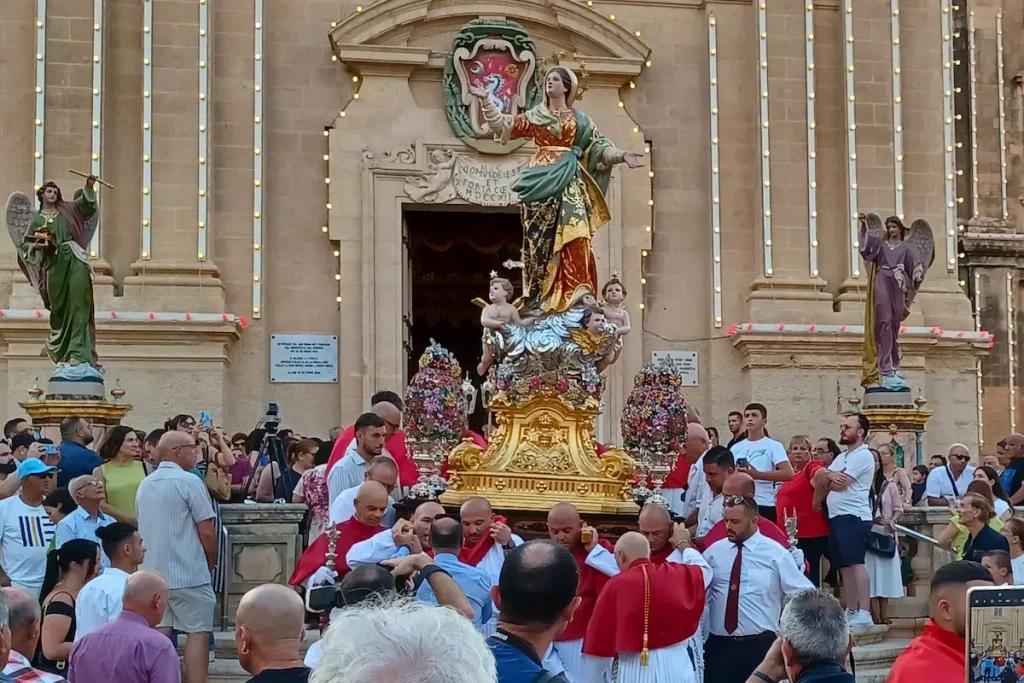
The most powerful moment comes when the statue returns to the church. As soon as it stops in front of the main entrance, fireworks light up the sky and the crowd erupts in applause and cheers. For many Maltese, this is the climax of the entire festa, when religious ceremony and popular celebration naturally come together.
The celebrations often continue until well after midnight. Music still drifts through the streets, stalls remain open, and people sit in the squares, stroll between illuminated churches or watch the fireworks. By the following morning, most of the decorations are being dismantled and the towns and villages begin preparing for the next festa.
Although all the celebrations share the same religious foundation, each town and village marks Santa Marija a little differently. The contrasts are greater than you might expect, ranging from monumental processions and internationally renowned fireworks to a quieter, family-oriented atmosphere. If you are wondering where to celebrate Santa Marija, the right choice depends mainly on what you hope to experience.