Why Is Malta So Concrete?
When climate protection, biodiversity, or support for pollinators are discussed in Malta, the language sounds right. In recent years, there have been campaigns focused on bees, seed packets were distributed to households, and people were encouraged to grow flowers on balconies and in gardens to provide food for pollinators. Official discourse is full of terms such as sustainability, climate adaptation, and green infrastructure.
And then you step outside. And something starts to feel off.
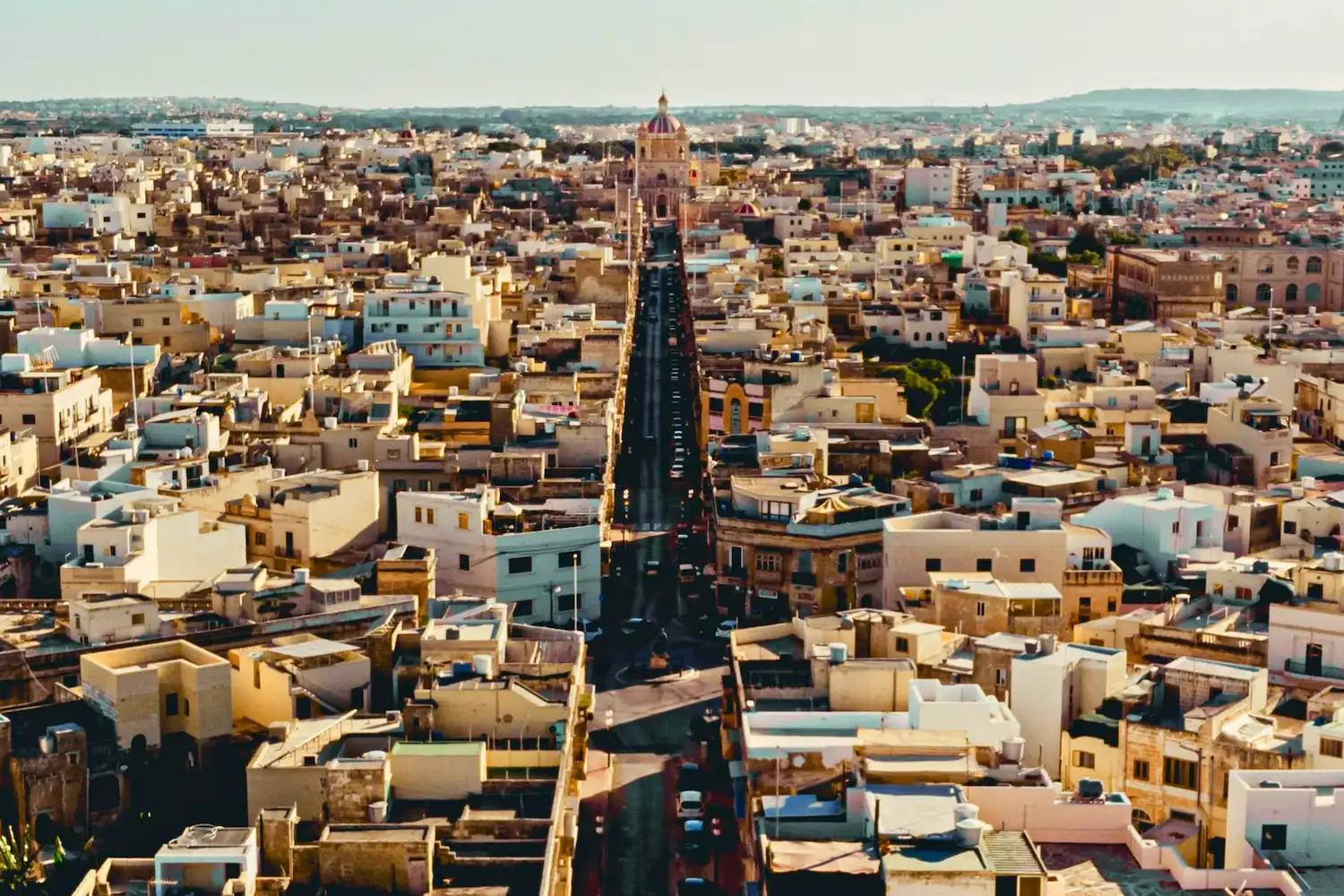
Parks are being paved over, developers add a token front garden with a few plants to new buildings, trees are felled or aggressively pruned (Tal-Barrani Road being a clear example), and public space is gradually transformed into a network of hard, heat-absorbing surfaces. Not randomly, but systematically. This gap between declarations and reality is worth examining—not to assign blame, but because without understanding the island’s underlying mindset, nothing is going to change.
When Good Intentions Meet Reality: Environmental Campaigns vs Public Space in Malta
Many people remember the period when pollinator protection in Malta was discussed in very concrete terms. Seed packets arrived in letterboxes, “plant for bees” campaigns appeared, and schools and households were encouraged to grow flowers. The intention was genuine and well meant.
The implicit message was clear: small insects matter, biodiversity has value, and even individual actions count.
The contrast became far more striking when large-scale projects later emerged that systematically removed precisely the environments that insects—and people—depend on, as seen at Ta’ Qali National Park.
Ta’ Qali: A Park That Stopped Functioning as a Picnic Space
A single place that concentrates this contradiction is Ta’ Qali National Park. The original grassy picnic area was replaced with a compacted gravel surface. This is not a cosmetic change, but a fundamental shift in how the park functions.
Grass is not decoration. Grass cools the environment, retains moisture, allows water infiltration, provides habitat for insects, and creates a microclimate that makes summer bearable. Compacted gravel does the opposite. It overheats, prevents infiltration, and from a biological perspective functions almost as a dead surface.
Without complete removal of this layer, natural vegetation will not return on its own. This is not a matter of opinion, but of physics and biology.
Trees as a Problem, Not a Value in Urban Malta
The same logic applies to trees. In Mosta, the felling and aggressive pruning of old ficus trees in the main square triggered strong public reactions. Trees that had provided shade for decades, supported small birds, and made the space habitable were suddenly reframed as obstacles to a “beautification” project.
The arguments repeat themselves: fallen leaves, roots, maintenance costs, safety concerns. The tree is not perceived as a value in itself, but as a potential problem that needs to be solved—ideally once and for all.
Yet in a Mediterranean climate, shade is not a luxury. It is basic survival infrastructure, increasingly replaced by individual indoor cooling.
What Is Considered “Mess” in Malta
One of the key cultural differences between northern or central Europe and Malta lies in the perception of leaves and “mess.” In a landscape historically defined by stone, cleanliness is associated with hard, washable surfaces. Fallen leaves mean extra work, resident complaints, clogged drains, and dirt carried indoors.
In countries such as Germany or Sweden, this is simply part of routine urban maintenance rather than a problem to be solved. Leaves are cleared, grass is cut, mud is understood as a normal by-product. In Malta, mud or dust on domestic staircases is often perceived as a failure—a sign that something has not been “done properly.”
So surfaces are hardened. Preventively.
Public Space: Designed to Stay the Same
This is where we reach the core of the issue. Public space in Malta is often designed as a finished object, not as a living system that changes with the seasons. The ideal park is one that, once opened, requires minimal intervention and ongoing costs. It does not dry out, wear down, or need mowing. No one complains.
Greenery, by definition, is dynamic. It grows, ages, and requires care. A system that avoids long-term responsibility struggles to accommodate this reality.
This is why concrete wins over grass. Not because it is better, but because it is predictable and relatively easy to maintain.
Interestingly, this obsession with “clean” surfaces does not equate to real order. Hard surfaces are expected to be smooth, washable, and leaf-free. Litter, however, often falls outside the same category of concern. A discarded plastic bottle or food wrapper does not interfere with the functionality of concrete—it does not clog drains, create mud, or demand long-term maintenance. It is a visible but temporary issue. And the system tolerates that far more easily than living, changing material.
Why Concrete-Heavy Cities No Longer Work in a Warming Climate
What may have worked decades ago is now failing. Urban areas and concrete surfaces continue to expand, while meadows, forests, and agricultural land shrink. Cities overheat, nights remain hot, and hard surfaces accumulate heat during the day only to release it at night. Public spaces empty out in summer because there is nowhere to stay, no refuge.
Paradoxically, water is then consumed to wash and cool concrete instead of being invested in greenery that would provide natural, long-term cooling.
Vertical gardens, which could serve as a compromise, are adopted only marginally. Not because they do not work, but because they are visible. Once they dry out, it becomes obvious that maintenance has stopped. And visible failure is precisely what the system tries to avoid.
This Is Not About People, but About the System
It is important to be clear: this is not a story about malicious officials or people who dislike nature. It is about a deeply rooted mentality in which a well-managed space is one that does not require ongoing care or financial investment.
Bees, seed packets, and awareness campaigns exist. But they collide with a reality where concrete represents certainty and greenery represents risk.
When Concrete Stops Protecting Cities from Heat
As temperatures rise and urban density increases, this equation starts working against its original purpose. Less greenery means more heat. More heat means fewer people outdoors. And public spaces that are not used stop fulfilling their social function.
Children have nowhere to play, families have nowhere to sit, cities become spaces to pass through rather than places to inhabit.
The contradiction between handing out seeds for bees and paving over parks is not individual hypocrisy. It is the outcome of a system that does not know how to work with living, changing environments.
As long as trees are treated as a problem because they shed leaves, and grass as a risk because it requires maintenance, Malta will continue to fight heat with concrete—and lose.