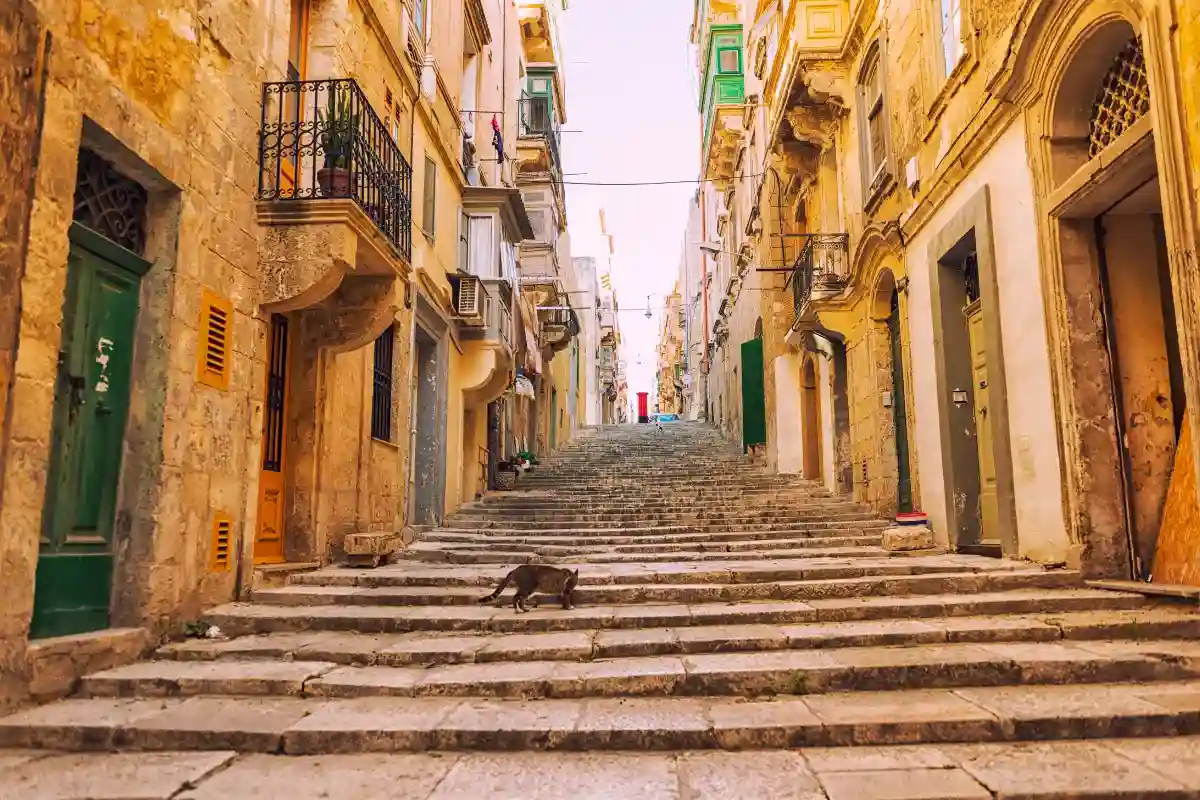
Malta with a Stroller: The Reality Beyond the Tourist Promenades
When I moved from Spain to Malta with a six-month-old baby, I had a fairly idyllic picture in my mind. Walks, the sea, cafés and a slower pace of life. Reality brought me back down to earth very quickly – not because of the people or the climate, but because of what everyday pedestrian infrastructure looks like beyond the tourist promenades.
A stroller – just like a wheelchair or walking stick – is a good litmus test for accessibility. Something an adult without mobility limitations can easily step around or simply ignore becomes an everyday obstacle. These are not rare exceptions, but a normal part of getting around.
Navigating Malta’s pavements with a stroller: a challenge of its own
Pavements are often narrow, disconnected and full of obstacles. A stretch of pavement may suddenly end, followed by a step, a raised doorway or a steep slope. Going around the obstruction is usually impossible – your only options are to tilt the stroller, move into the road or look for a completely different route.
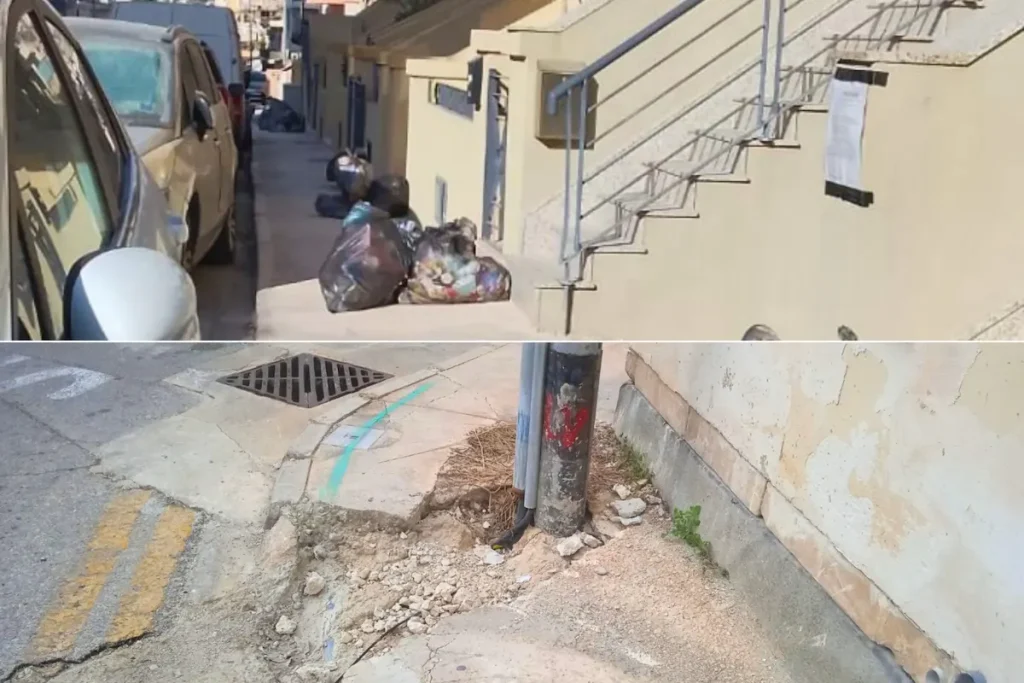
Another common sight is rubbish bags piled on the pavement while waiting to be collected. For someone walking, they are a minor inconvenience. For a stroller, they can bring the journey to a complete stop. There is simply no room to pass between the wall and the road without putting both yourself and your child at risk.
Then there are broken surfaces, lamp posts positioned in the middle of the pavement, cracked drainage channels and paving that has buckled or sunk. You have to remain constantly alert, watching every metre beneath your feet instead of looking at your surroundings.
My mother summed it up perfectly: instead of looking around, she had to watch the pavement the entire time to avoid tripping. And she does not have limited mobility herself.
Getting around Malta in a wheelchair: the reality beyond the brochures
Of course, using a stroller cannot be compared with the everyday experience of someone who uses a wheelchair. However, the obstacles I could overcome by lifting or tilting the stroller, or by briefly moving into the road, also show why independent travel is far more difficult for people with limited mobility – and completely impossible in some places.
Malta has made progress in recent years when it comes to formal accessibility. Government offices, hospitals, schools and parts of the tourist infrastructure have accessible entrances, ramps or lifts. New apartment buildings are now commonly built with lifts – but reaching the lift may still involve climbing several steps at the entrance. On paper, the building is accessible. In practice, it may be anything but.
There are also recommended routes, including some in Valletta, that are presented as wheelchair accessible. But the problem does not begin inside individual buildings – it begins between them.
Malta’s everyday pedestrian infrastructure is not designed as a continuous, navigable network. The problem is not limited to rubbish bags, parked cars or other obstacles that could theoretically be removed. Many pavements are unusable for wheelchair users because of the way they were built. Their width can change within a few metres, narrowing until a wheelchair can no longer fit. The remaining space is often occupied by a lamp post, utility pole or an additional step built outside the entrance to a home.
Even where a pavement is wide enough, there is no guarantee that it will continue. It may run for several dozen metres and then simply end in the road, with no dropped kerb, pedestrian crossing or safe way to continue on the other side. This is not merely an inconvenience or a matter of taking a detour. A wheelchair user can find themselves in a place where it is impossible to continue safely or cross to the other side of the road.
Some promenades, public buildings and tourist attractions are accessible, but they often function as isolated accessible sections. The crucial question is how someone can reach them independently and whether they can continue their journey afterwards. A ramp at the entrance or a lift inside a building does not create an accessible city if there is no continuous, navigable route connecting one place to another.
Compared with the pedestrian infrastructure that people are accustomed to in many other European countries, getting around Maltese towns independently in a wheelchair is considerably more difficult. This does not mean that wheelchair users cannot visit Malta. However, travelling independently beyond a few selected areas is extremely challenging and, in some places, effectively impossible. A visit therefore requires careful planning of both transport and individual routes and, in many cases, assistance from another person.
Malta can be very inclusive in a social sense, yet it falls significantly short when it comes to inclusion in public spaces. Urban planning has long failed to give pedestrians sufficient consideration, and people with limited mobility are affected most. The less visible they are in public spaces, the easier it becomes to overlook the scale of the problem and the less everyday pressure there is for change.
This does not mean that getting around Malta with a stroller or wheelchair is impossible. But it is a place where even an ordinary trip to the shop can become a route that must be planned in advance. As long as accessibility is measured by the ramp at the entrance rather than the entire journey leading to it, accessibility in Malta will often remain something that exists on paper rather than in everyday life.