Car Rental Insurance in Malta: Deposits, CDW, Full Coverage & Hidden Costs
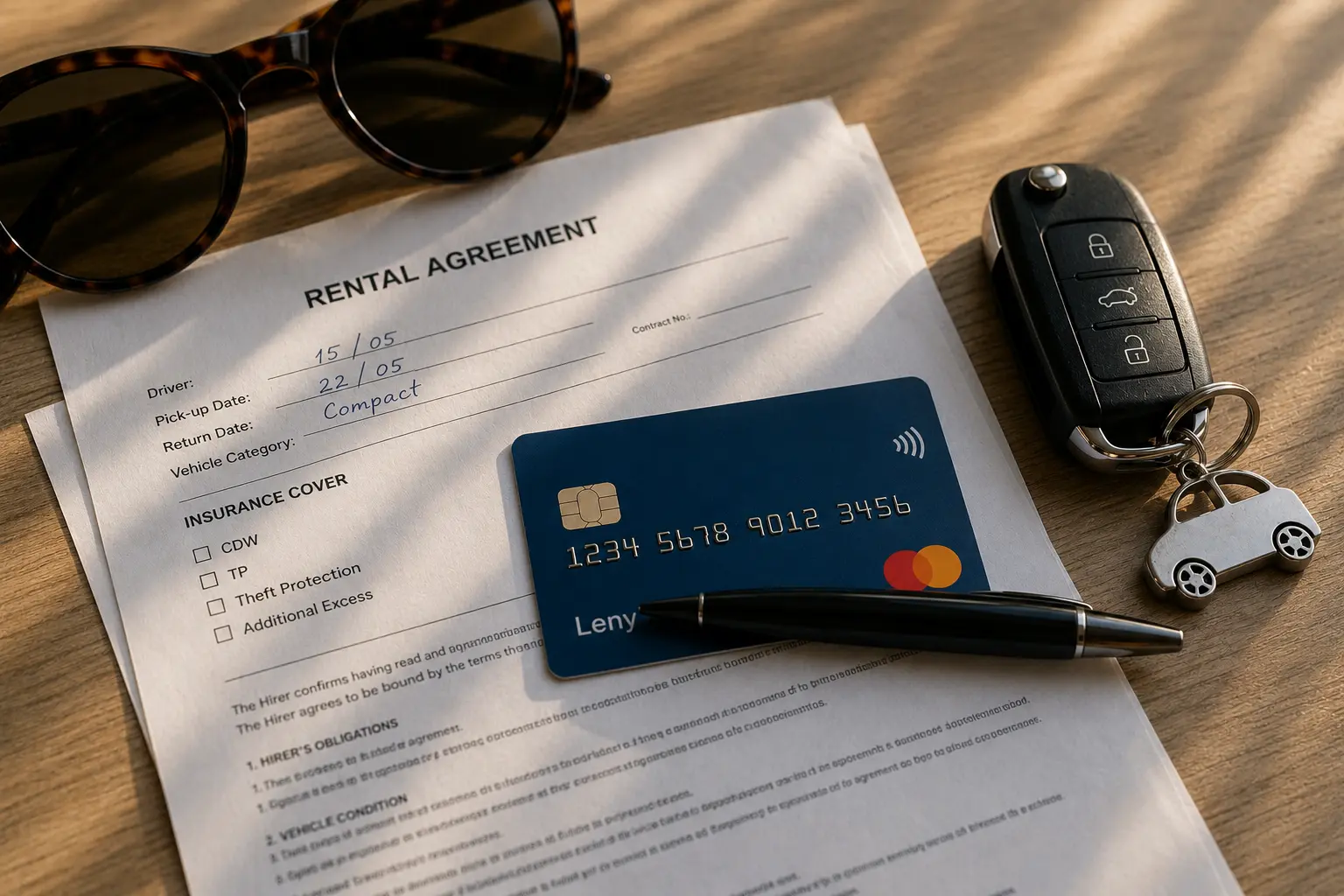
Payment and deposit blocking are one of the most important aspects of renting a car. Most traditional car rental companies require a credit card in the driver’s name, on which they block a refundable deposit when you collect the vehicle. This acts as security in case you damage the car or fail to comply with the rental agreement. The blocked amount usually corresponds to the insurance excess — typically from around €600 for the smallest cars up to €1500 or more for higher vehicle categories. This “deposit” is not merely a formality. If the car is damaged, the rental company may deduct the repair costs from it. If the vehicle is returned without issues, the deposit is released back to your card, usually within 1–4 weeks after the rental ends.
What if you do not have a credit card or simply do not want a large amount of money tied up during your holiday? One option is renting a car with full insurance and no deposit. Many rental companies — especially local providers — offer this. The customer pays extra for full coverage, and the company either does not block any deposit at all or only a symbolic amount.
Some car rental companies accept debit cards only if you purchase full insurance coverage. The reason is simple — it reduces the company’s financial risk if an accident occurs and there is no large excess amount available to cover damages.
Many smaller local rental companies in Malta now allow rentals without a large security deposit or only with a minimal one, often in exchange for full insurance coverage. Some of them can also be found through platforms focused on more flexible local providers.
Of course, nothing is truly free — full coverage insurance (often called Super CDW) can be quite expensive, usually adding around €20–30 per rental day. For short rentals of just a few days, this can nearly double the total rental cost. At that point, it mainly comes down to what feels worse to you: paying more for insurance or having several hundred to over a thousand euros blocked on your card.
Full insurance coverage is often relatively expensive, usually around €20–30 extra per day. On shorter rentals, the cost can rise surprisingly quickly, so it is worth calculating in advance whether you will actually use the car enough in Malta or whether it may make more sense to rely on public buses, taxis and other transport alternatives instead.
If you do not have a credit card at all, I explain in more detail how renting a car without a credit card works.
High Deposit or Full Insurance: Which Option Makes More Sense?
You essentially have two main choices — either rent the car cheaply with a high card deposit, or pay extra for zero excess coverage and either avoid the deposit entirely or reduce it significantly. Either way, always read the conditions of the specific rental company carefully so you know exactly what you are agreeing to. With reputable companies, deposits are generally released within 1–4 weeks if no damage occurs.
If you do not want to deal with large credit card holds, I would personally recommend comparing offers from local rental companies with lower deposits, where you can often filter options that accept debit cards or require only minimal deposits.
Car Rental Insurance Types: What TPL, CDW and TP Actually Mean
Car rental agreements are full of abbreviations. Anyone renting a car abroad should understand the basic insurance terminology, although it is worth noting that these abbreviations are not fully standardised and may vary slightly between providers.
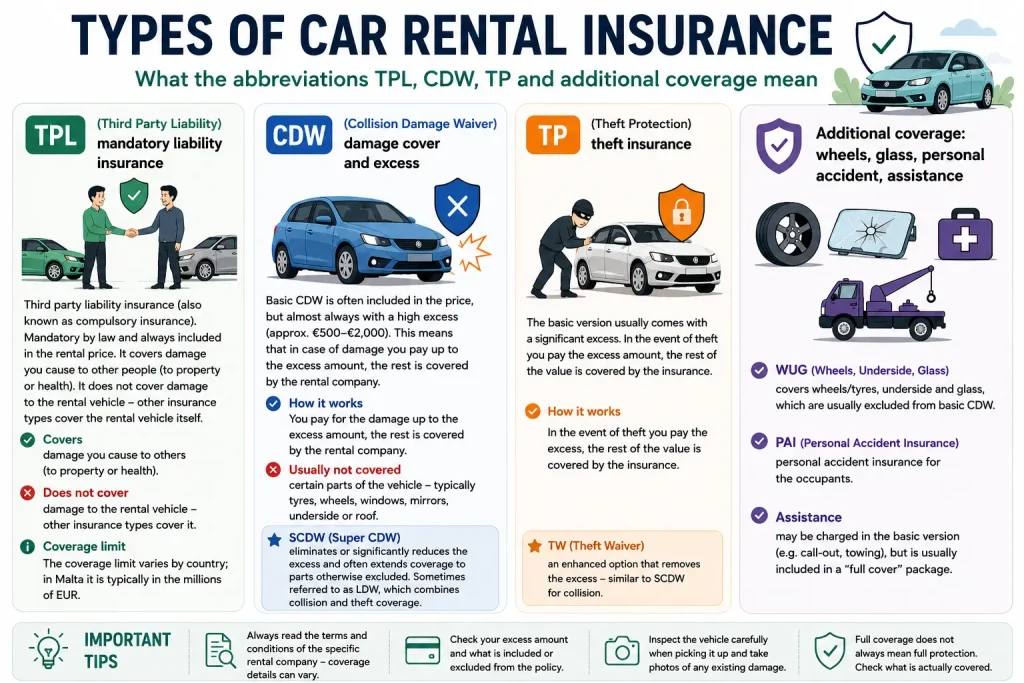
Understanding common insurance abbreviations
TPL (Third Party Liability) – mandatory liability insurance
Third-party liability insurance is legally required and always included in the rental price. It covers damage you cause to other people, vehicles or property. However, it does not cover damage to the rental car itself — that is what additional insurance products are for.
CDW (Collision Damage Waiver) – collision damage cover and excess
Basic CDW is often included in the rental price, but almost always with a high excess, typically around €500–2000. This means that if the vehicle is damaged, you are personally responsible for costs up to the excess amount, while the rental company’s insurance covers the remainder. CDW also commonly excludes certain parts of the vehicle such as tyres, wheels, windows, mirrors, the underbody or the roof.
TP (Theft Protection) – theft insurance
The standard version usually comes with a fairly high excess. If the vehicle is stolen, you lose the excess amount while the remaining value is covered by the insurance.
What Full Coverage Usually Does NOT Include
Even if you pay for full insurance coverage, always ask exactly what is and is not included. The term Full Coverage is not universal — with one company it may include almost everything, while another provider may still exclude certain items such as tyres or windows unless they are specifically added as extra coverage.
Damage to the interior, lost keys, using the wrong fuel and similar situations are also typically excluded from insurance and must usually be paid entirely by the customer.
In short: basic insurance generally means high excesses and multiple exclusions, while extended protection means lower or zero excess and broader coverage. Without reading the terms carefully, it is very easy to end up with unpleasant surprises.
Also be cautious with third-party excess insurance, such as coverage included with premium payment cards or travel insurance policies. While such insurance may technically work, the rental company will often still charge the damage amount directly from your deposit first, and you then need to claim reimbursement from the insurer afterwards.
Letting Someone Else Drive Can Invalidate Your Insurance
If you did not pay for an additional driver, do not allow anyone else to drive the vehicle. In the event of an accident, the insurer may refuse coverage because the contractual conditions were not respected.
Hidden Fees and Conditions to Watch Out For
- High excesses and insurance exclusions
Always check how high the insurance excess is and what the policy actually excludes. - Vague definitions of damage
Some cheaper rental companies define “damage” very vaguely and may charge even for normal wear and tear. - Additional card holds beyond the deposit
Besides the standard deposit, some companies may also block extra funds for fuel or potential fines. - Pressure to buy extra insurance at the desk
Rental staff may strongly push you to purchase full insurance on arrival, often using the high excess as leverage. - Strict accident reporting procedures
Make sure you understand the required steps after an accident. Failing to follow the correct procedure can invalidate the insurance.
If you are visiting Malta for the first time and do not want the stress of large card deposits, I would personally focus more on local rental companies with lower deposits and full insurance options. It can save a surprising amount of stress, especially if you do not yet have experience with what driving in Malta actually feels like and the island’s rather chaotic traffic culture.